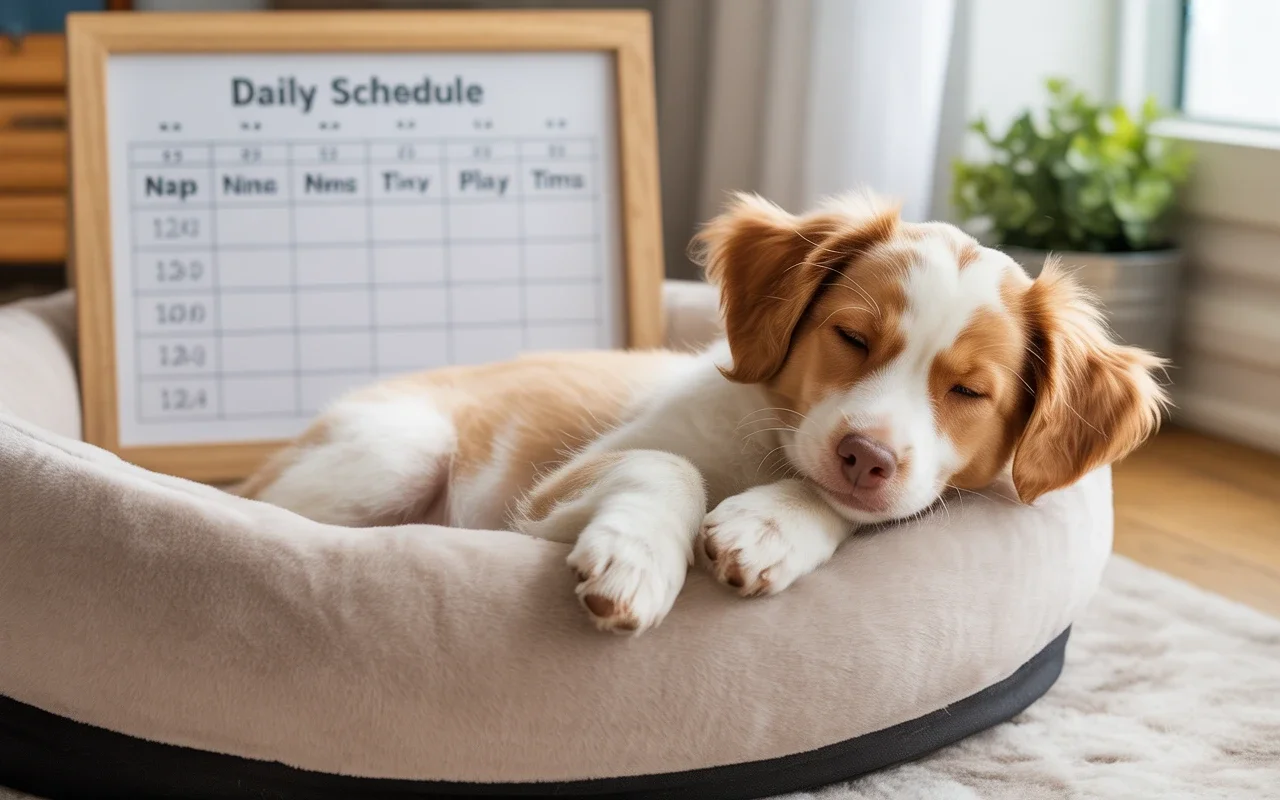
Bringing a new puppy home is one of life’s most exciting experiences—but it also comes with its challenges. Among the first things every puppy parent notices is just how much their furry friend sleeps. Understanding your puppy sleep schedule is essential not only for their growth and health but also for creating a smooth routine for your household.
In this article, I’ll guide you through everything you need to know about puppy sleep patterns, how much sleep your puppy really needs, and practical tips to help them rest better.
Content
How Many Hours Should a Puppy Sleep Daily?
One of the most common questions new puppy owners ask is, “How long do puppies sleep?” The answer varies depending on age and breed, but generally:
Newborn to 4 weeks: 18–22 hours of sleep per day
1–3 months old: 16–20 hours
3–6 months old: 14–18 hours
6 months to 1 year: 12–16 hours
Adult dogs: 12–14 hours
Puppies, like human babies, are growing rapidly. Their bodies need extended rest periods to support healthy development, cognitive growth, and immune system strength.
Pro Tip: Observe your puppy’s behavior. If your puppy seems lethargic or unusually restless, it could be a sign that their sleep schedule isn’t optimal.
Why Do Puppies Sleep So Much?
It’s normal for puppies to spend most of the day snoozing, but the reasons go beyond just being cute:
Rapid Growth: Puppies’ muscles and bones grow quickly, requiring more rest.
Brain Development: Sleep helps puppies process everything they learn about their environment.
Energy Restoration: Playtime and exploration can be exhausting for small bodies.
Immune Support: Proper sleep helps fight off infections and supports vaccinations.
In my experience as a pet owner and trainer, I’ve noticed that puppies who get less sleep often develop cranky behavior, disrupted eating patterns, or even digestive issues.
Real-Life Case Study: Bella’s Sleep Transformation
Bella, a 3-month-old Golden Retriever, was adopted by my friend Sarah. Initially, Bella was constantly waking up during the night, whining, and refusing to nap during the day. This disrupted both her growth and the household routine.
Sarah established consistent nap times after play and meals.
A quiet, dark, and comfortable sleeping area was created.
Evening walks and a calm pre-bed routine were introduced.
Within two weeks, Bella started sleeping through the night, napped predictably during the day, and became more alert and playful during waking hours. This case illustrates how a structured puppy sleep routine directly impacts a puppy’s mood, health, and overall development.
How to Set a Puppy Sleep Schedule
Creating a consistent sleep schedule for your puppy is easier than it sounds. Here’s a practical step-by-step guide:
1. Create a Comfortable Sleeping Area
Your puppy should have a quiet, dark space away from household noise. Use soft bedding and keep the area consistent so your puppy associates it with sleep.
2. Follow a Regular Nap Schedule
Use your puppy’s natural rhythms: after meals or playtime, encourage short naps. This helps regulate their puppy nap schedule and reduces over-tiredness.
3. Establish a Nighttime Routine
Consistency is key. Take your puppy out to potty before bed, offer gentle play, and then guide them to their sleeping area. Avoid loud noises or excessive interaction just before bedtime.
4. Monitor Daytime Sleep
Avoid letting your puppy sleep too much during the day as this can interfere with nighttime sleep. Short naps are healthy, but extended daytime snoozing may cause night-time wakefulness.
5. Adjust for Age
As your puppy grows, gradually reduce total sleep hours while maintaining a predictable routine. Remember, each puppy is unique—adjust according to your puppy’s needs.
There’s no “perfect” bedtime for puppies, but most do well with a consistent evening schedule:
Feed and potty: 30–60 minutes before sleep
Gentle play or calm bonding: Helps them wind down
Lights out: Ideally, between 8–10 PM for younger puppies
Maintaining a consistent bedtime helps regulate your puppy’s internal clock and supports a predictable sleep schedule.
Sample Puppy Sleep Schedule Daily
Here’s an example schedule for a 3-month-old puppy:
Time
Activity
7:00 AM
Wake up & potty
7:30 AM
Breakfast
8:00–10:00 AM
Playtime / training
10:00–12:00 PM
Nap
12:00 PM
Lunch / potty
12:30–2:30 PM
Playtime / short walk
2:30–4:00 PM
Nap
4:00–6:00 PM
Interactive play
6:00 PM
Dinner / potty
7:00–8:30 PM
Calm bonding or gentle walk
8:30–9:00 PM
Pre-bed routine
9:00 PM
Sleep
This is just a guideline. Adjust according to your puppy’s energy levels and age.
Common Puppy Sleep Problems and Solutions
Even with a schedule, some puppies may face sleep disruptions:
Whining or Crying at Night: Usually a need for potty or comfort. Avoid reinforcing attention-seeking behavior by letting them cry too long.
Excessive Napping During the Day: Reduce daytime naps slightly to encourage nighttime sleep.
Restlessness: Ensure your puppy is exercised and mentally stimulated during waking hours.
Consistency and observation are key. Puppies adapt quickly to a structured routine when it’s implemented gently but firmly.
Final Thoughts: Puppy Sleep Schedule
A consistent puppy sleep schedule is essential for growth, health, and happiness. By observing your puppy’s natural rhythms, creating a comfortable sleep environment, and following a predictable routine, you can ensure your puppy grows into a healthy and well-adjusted adult dog.
Remember Bella’s case: a structured schedule transformed her nights and improved her overall wellbeing. Your puppy can benefit just as much from a little planning, patience, and attention.
Join Felipe Clark on a heartwarming journey through the world of pet adoption. He’s a true advocate for shelter animals, sharing stories that tug at the heartstrings and inspire adoption.
In today’s world, ensuring your family’s safety is a top priority. While security systems and alarms are useful, nothing compares to the loyalty and protection…
When it comes to calming anxious dogs, many veterinarians recommend Trazodone For Dogs. Originally developed for humans to treat depression and anxiety, Trazodone For Dogs…