Ear mites in dogs are one of the most common yet uncomfortable ear problems I see in everyday pet care situations. These tiny parasites may be microscopic, but the irritation they cause is anything but small. Dogs suffering from ear mites often feel constant itching, discomfort, and frustration—and as pet owners, it can be worrying to watch.
In this guide, I’ll walk you through everything you need to know about Ear Mites In Dogs, including symptoms, causes, diagnosis, treatment options, and prevention tips based on real-world experience and veterinary understanding. I’ll also share a real-life case study to help you recognize how quickly this condition can develop and what recovery looks like.
Content
What Are Ear Mites In Dogs?
Ear mites in dogs are tiny parasitic organisms known as Otodectes cynotis. They live inside the ear canal, feeding on wax and skin oils. Even though they are microscopic, they reproduce quickly and can cause intense irritation.
In most cases, ear mites in dogs spread through direct contact with infected animals, especially cats or other dogs. Puppies and young dogs are more vulnerable because their immune systems are still developing.
When ear mites settle in the ear canal, they create inflammation and discomfort, often leading to secondary infections if left untreated.
Ear Mites In Dogs Symptoms You Should Never Ignore
One of the most important steps in early detection is recognizing ear mite symptoms in dogs before the condition becomes severe. Many pet owners initially mistake it for a simple ear infection, but ear mites have some distinct signs.
Common symptoms include:
Frequent head shaking
Constant scratching of the ears
Strong ear irritation or sensitivity when touched
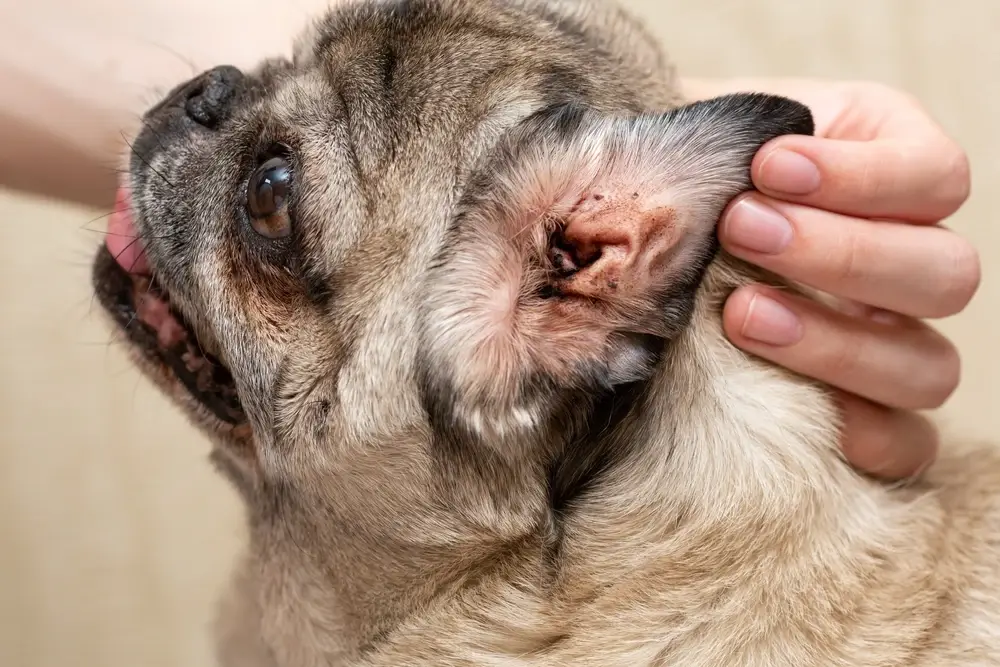
black discharge from dog ears that looks like coffee grounds
Redness and swelling inside the ear
Foul odor coming from the ears
Restlessness or irritability
In many cases, dogs will also rub their ears against furniture or the floor in an attempt to relieve itching.
A key warning sign I always tell pet owners to look for is a combination of itchy ears in dogs along with dark, crumbly discharge. This is often a strong indicator of ear mites rather than just a bacterial infection.
What Causes Ear Mites In Dogs and How Do They Spread?
The main cause of ear mites is exposure to infected animals. These parasites spread very easily through close contact, especially in environments where multiple pets interact.
Understanding what causes ear mites in dogs and how do they spread is important for prevention:
Direct contact with infected dogs or cats
Shared bedding or grooming tools
Outdoor exposure to stray animals
Mother-to-puppy transmission
Ear mites are highly contagious among pets, but they do not survive long without a host. This means they depend on animal-to-animal contact to spread.
How Vets Diagnose Ear Mites In Dogs
If you suspect ear mites, a veterinary visit is the safest step. A vet will usually examine the ear using an otoscope to look inside the canal. In many cases, they collect a small sample of ear debris and examine it under a microscope.
This confirms the presence of mites or rules out similar conditions such as yeast or bacterial infections.
Professional diagnosis is important because dog ear infection mites can look very similar to other ear problems, but the treatment is different.
Effective Treatment Options for Ear Mites In Dogs
Treating ear mites requires consistency and proper medication. Most vets recommend a combination approach:
1. Ear Cleaning
The first step is gently cleaning the ear to remove wax buildup and debris. This helps medication work more effectively.
2. Medicated Ear Drops
Veterinarians prescribe antiparasitic ear drops that directly kill mites inside the ear canal.
3. Parasite Prevention Medication
Some oral or topical treatments help eliminate mites and prevent reinfestation.
4. Treating All Pets in the Household
Even if only one pet shows symptoms, all animals should be treated to avoid reinfection.
Many pet owners ask about how to treat ear mites in dogs at home safely. While some mild cleaning and supportive care can be done at home, full treatment should always involve veterinary guidance.
Home care may include:
Cleaning ears with vet-approved solutions
Keeping ears dry and clean
Monitoring for symptom improvement
However, using random home remedies without diagnosis can worsen irritation or delay proper treatment.
How to Tell If Your Dog Has Ear Mites or Ear Infection
A very common concern is confusion between mites and infections. While both affect the ears, there are differences:
Ear mites usually cause dark, crumbly discharge
Bacterial infections often produce yellow or green discharge
Mites cause intense itching, often more severe than infections
Infections may produce more odor and pain
If you’re unsure, a vet check is always the best option.
Can Ear Mites In Dogs Spread To Humans Or Other Pets?
A common question pet owners ask is whether ear mites can affect humans. The good news is that can ear mites in dogs spread to humans or other pets is rarely a concern for people.
However, they can easily spread between pets like:
Dogs
Cats
Rabbits (in rare cases)
This is why isolation and simultaneous treatment are often recommended.
Prevention Tips to Avoid Future Ear Mite Problems
Preventing ear mites is much easier than treating them. Here are simple but effective steps:
Use regular flea and parasite prevention treatments
Clean your dog’s ears occasionally with vet-approved solutions
Avoid contact with stray or infected animals
Keep bedding and grooming tools clean
Schedule routine veterinary checkups
Good hygiene and preventive care significantly reduce the risk of recurrence.
Real-Life Case Study: A Puppy With Severe Ear Mites
A few months ago, I came across a 5-month-old Labrador puppy named Bruno. His owner brought him in because he was constantly shaking his head and scratching his ears.
At first glance, it looked like a minor irritation. However, upon examination, the ears were filled with dark, coffee-ground-like debris—a classic sign of ear mites.
The diagnosis confirmed a severe case of infestation. Bruno had likely picked up mites from a stray cat during a walk in the neighborhood.
Treatment Plan:
Ear cleaning every 2–3 days
Prescription ear drops for 14 days
Preventive medication for all household pets
Outcome:
Within 10 days, Bruno showed significant improvement. The itching reduced, and by the third week, his ears were completely clear.
This case highlights how quickly ear mites in dogs can escalate—but also how effectively they respond to proper treatment when addressed early.
Final Thoughts
Ear mites in dogs are uncomfortable but highly treatable when caught early. The key is recognizing symptoms like head shaking, scratching, and black discharge from dog ears before the condition worsens.
If you ever notice signs such as ear mite symptoms in dogs or suspect dog ear infection mites, don’t delay a vet visit. Early diagnosis and treatment can prevent unnecessary pain and complications.
If your dog is experiencing severe itching or skin irritation, it could also be linked to Mange In Dogs, another common parasitic skin condition that requires prompt veterinary treatment.
FAQs
How can I get rid of ear mites in my dog?
Use vet-prescribed ear drops and parasite treatment after cleaning the ears properly.
Can I treat ear mites without going to the vet?
Mild cases may improve with cleaning, but full treatment requires veterinary medication.
Can a human get ear mites from a dog?
It is very rare for humans; ear mites mainly spread between pets, not people.
What naturally kills ear mites?
Natural options are limited; vet-approved treatments are the most effective and safest solution.
Join Felipe Clark on a heartwarming journey through the world of pet adoption. He’s a true advocate for shelter animals, sharing stories that tug at the heartstrings and inspire adoption.
If you’ve ever seen a Pembroke Welsh Corgi, you already know what makes them so irresistible — that bright smile, short legs, and cheerful personality.…
White fluffy dogs have an undeniable charm. Their soft, cloud-like coats and affectionate personalities make them some of the most beloved companions around the world.…